
Stop four, day one: a day in Floda
Meeting Linda Linder and visiting Smörblommans förskola with Suzanne Axelsson

I was thrilled to receive an invitation from Linda to spend the day with her and Suzanne. Linda Linder, a trained theatre teacher, preschool and primary school teacher, and atilerista, has positively influenced many educators in Sweden according to numerous accounts. Her blog, which provides further insights into her work, can be found here.
Our day began with a visit to a local library where Linda had begun setting up an exhibition showcasing her journey with the children who attend the ‘Third Room’ (more details to follow). We then proceeded to Smörblommans preschool, a welcoming environment that sparked my curiosity and excitement.
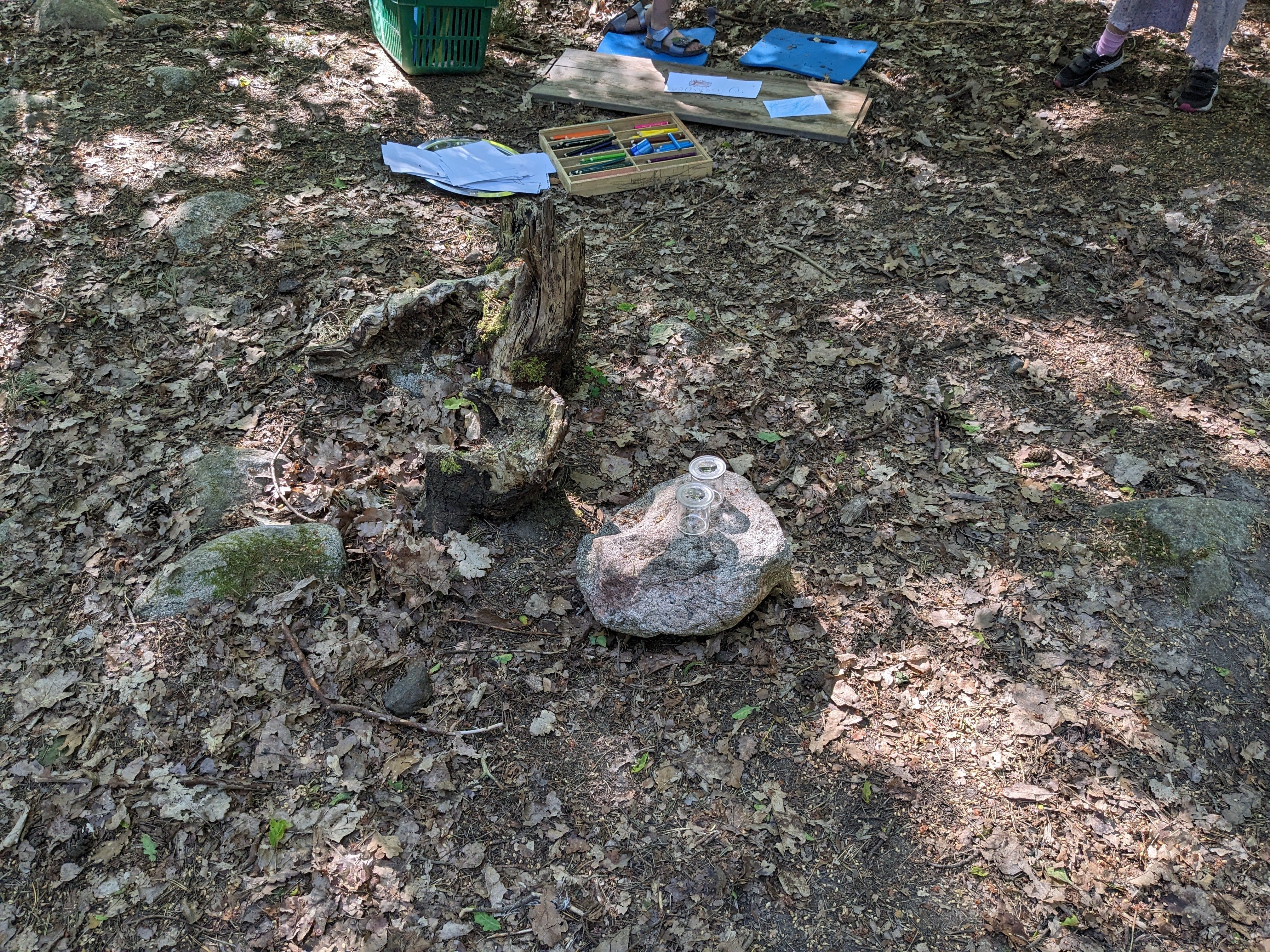
Suzanne and I first joined a group of older children who were spending time in the adjacent forest. I noticed that the materials brought into the forest by the preschool did not encourage any harm to the forest. Instead, these materials were used in harmony with nature. While some damage is inevitable, these materials were primarily used to foster joy, imagination, and curiosity. Pallets were arranged on the floor, creating a magical pathway; small jars were used for temporary bug observation before their release, and ropes were entwined around branches, connecting children to the tree through ‘play’. The children were indirectly taught to appreciate nature and develop a connection to its richness.
So often our discussions with children lead to what revolve around what we can do with nature and how we can use it. Rarely do we discuss how it nourishes our senses and how we can care for it. I live on Awabakal Country and have been taught and shown by Awabakal Elders to discuss with children the importance of giving back to nature when we take from it. Suzanne discusses in the Original Learning Approach the importance of decolonizing play and quotes seven principles of Indigenous methodology by Archibald et al. (2019). They are respect, reverence, reciprocity, responsibility, holism, interrelatedness, synergy (Axelsson, p. 27, 2023).
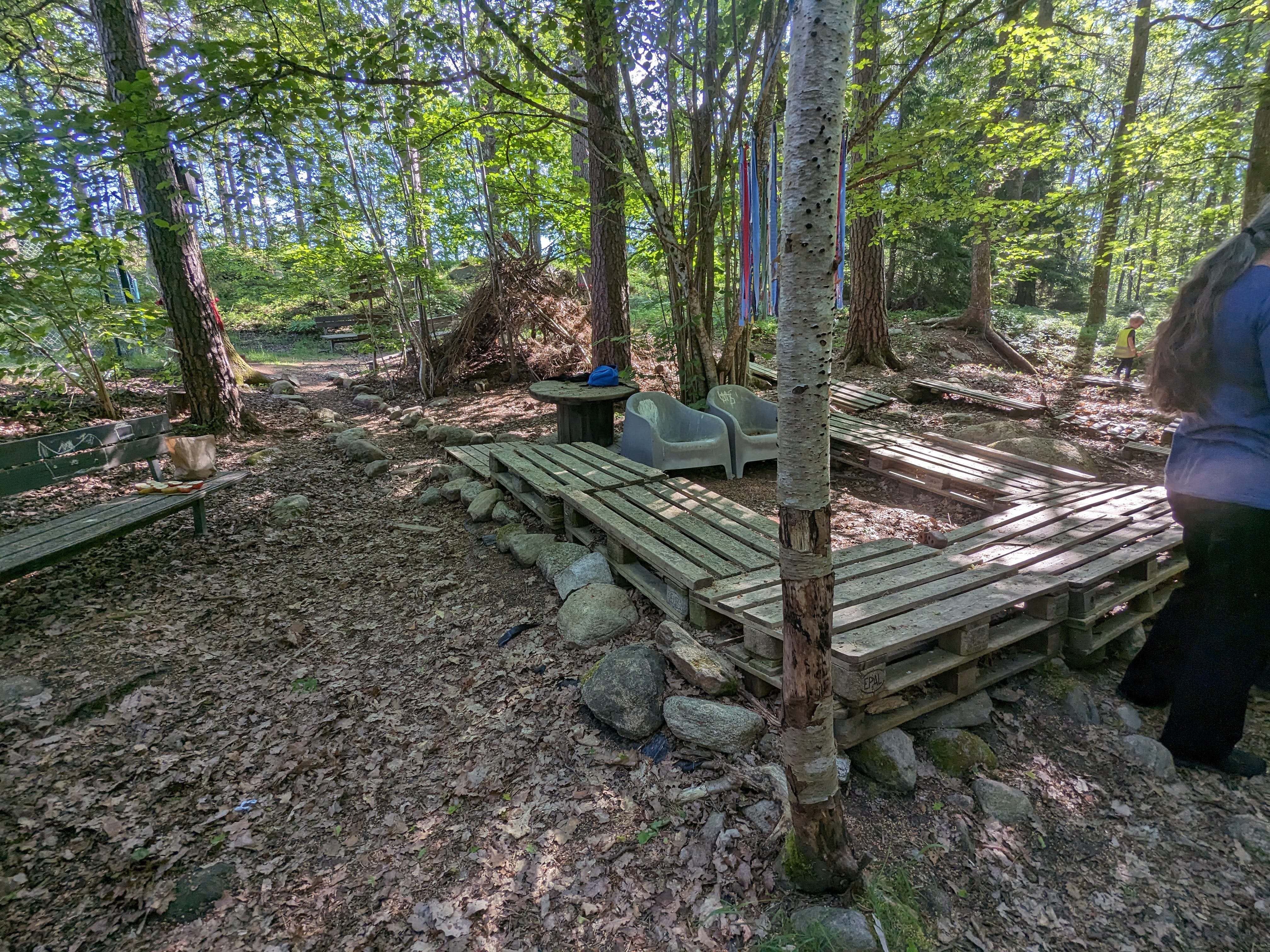
ABOVE: Pallets, seats, cable reels, fabrics
BELOW: Small glass jars, and coloured pencils and paper
Upon entering the classroom, we joined a teacher conducting a ‘lesson’. This lesson was not a traditional, structured session but rather an immersive experience that required the children to engage with the room. The room was filled with various loose parts, primarily consisting of recycled, natural, and processed materials. Several ‘projects’ were in progress within the room, each child exploring these within the context of their play.
The room was dimly lit, as some children were using torches to examine scratches on the floor (refer to the top-left photo). The children believed these scratches were the work of an unknown tiny creature, a theory they had been documenting for several months. Instead of dismissing their imaginative theories, the teacher encouraged their curiosity with simple questions. This approach further fuelled the children’s curiosity, leading them to construct small, homely necessities for the creature, e.g., a bed. The element of ‘unknowing’ kept their interest alive.
What also intrigued me was the children’s willingness to pack away their work and clear the space at the end of the ‘lesson’. This is a stark contrast to my workplace, where we strive to keep children’s work so they can return to it. However, the need for a multi-use space was evident when I later observed three boys utilizing the same space for rough-and-tumble play. This space was necessary for them to expend their energy.


One aspect of this preschool that I truly loved was two boards that were visible to all stakeholders. The board on the right displayed daily operational updates and changes, such as staff absences, replacements, and space planning. This particularly resonated with me as my workplace is a community-based service, which is co-led by a parent management committee. In these spaces, the community is the lifeblood and having that display of governance, I think, shows a quality of transparency. In Australia, early childhood education and care is in a dire state, and I believe something like this would serve as a reflection of the harsh reality of working in this sector right now - especially a standalone, community-based long day care service. Perhaps it would invite the community to be further involved in the necessary upkeep of the service?
The board on the left highlighted the team’s focus on the ‘feel’ of the service. The ‘feel’ this service currently is a connection to nature. This board is led by the pedagogistas (educational leaders) and it served as a reminder to appreciate nature upon entering the space. This appreciation was manifested and experienced in the rooms (refer to the gallery below). Could you imagine this board placed in every service? Perhaps rather than a centre philosophy, a board would create a better ‘feel’ of a place? Or perhaps it could be a reflection of a whole service research approach?
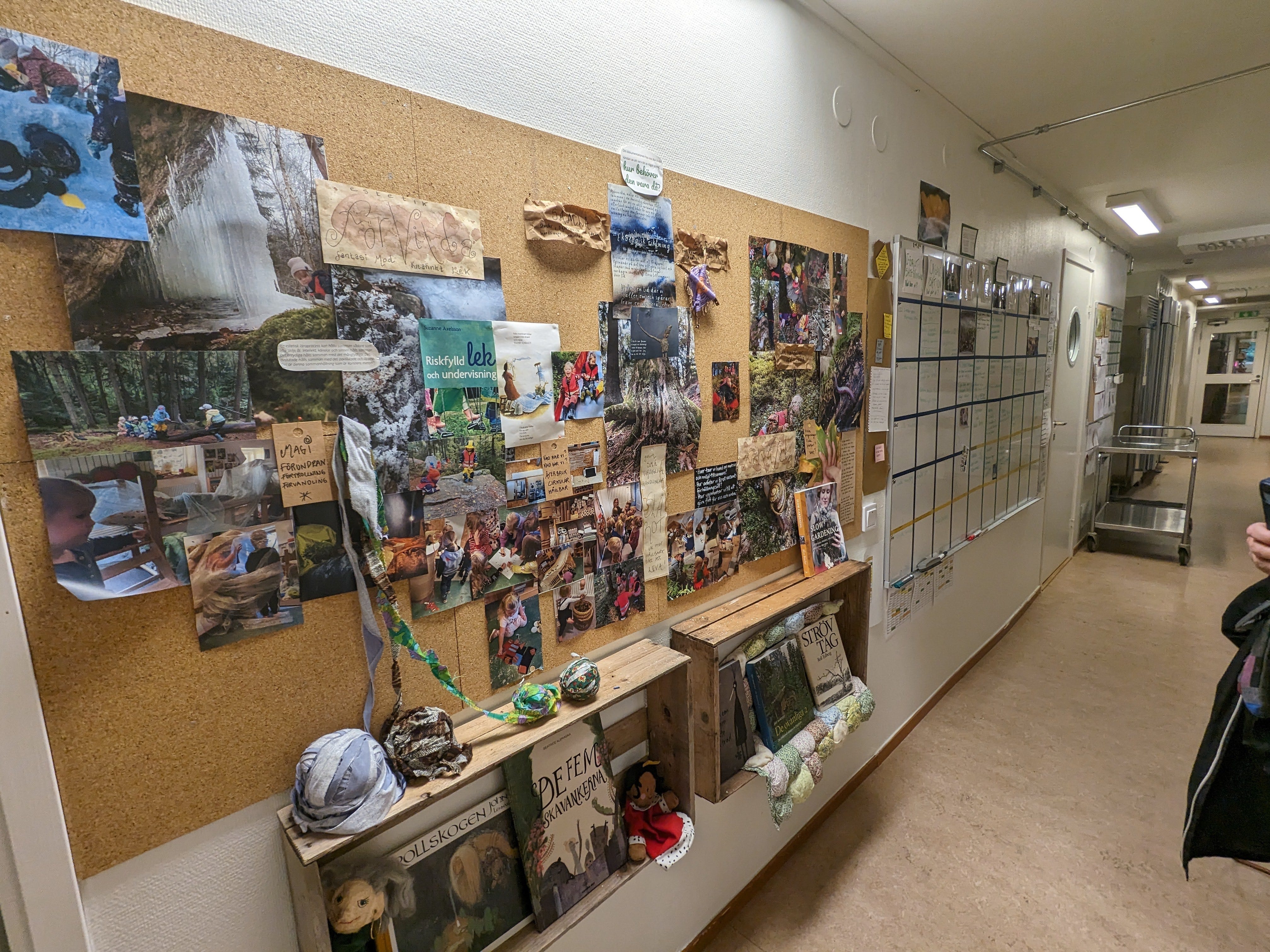
ABOVE: Left, the inspiring board of how the service ‘feels’. Right, the daily operations that promotes business transparency.
BELOW: Different rooms, different projects - all inspired by nature


I think this ‘theme’ underscored my later dialogue with Suzanne and Linda. Our discussions, which took place over a traditional Swedish Fika revolved around the concepts of play and aesthetics. Additionally, I was introduced to Biesta’s ‘World-Centred Education’, providing a new perspective to our conversation.